
Covid brought with it countless challenges–but one thing it emphasized? The need for social-emotional learning (SEL) in each and every classroom.
Students can’t learn unless they feel safe and secure. It is this state of well-being that greatly contributes to their academic achievement, personal growth, and health. SEL quickly skyrocketed from a “nice to have” classroom feature to something that districts prioritized and quickly moved to incorporate as classroom must-haves.
So, what are the most important aspects of an SEL program? How can your school and district support the whole child in person and online? What resources will support learning recovery, equity, and student engagement?
Join this Teach Strats webinar, sponsored by Stride Learning Solutions, to discover just how important SEL is to your school community.

- In districts, reaching readiness, retention, and success - March 5, 2026
- AI use is on the rise, but is guidance keeping pace? - January 2, 2026
- 49 predictions about edtech, innovation, and–yes–AI in 2026 - January 1, 2026
More from Teach Strats
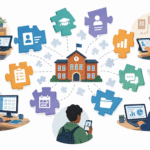
The hidden cost of fragmented student data in K–12 schools
In many K–12 schools today, fragmented student data has quietly become one of the most significant barriers to effective decision-making and day-to-day operations. While digital tools have expanded rapidly in classrooms and administrative offices, the systems managing student information, communication, and reporting often remain disconnected.

The 4 keys to creating meaningful student-led inquiry
Does the thought of student-led inquiry make you nervous? For some teachers, handing over control of the classroom to their students sounds like an invitation for disaster.

Gender-specific education: Examining boys’ educational needs and learning strategies
In recent years, educational research has sparked significant discussion about whether boys and girls learn differently and if gender-specific teaching strategies could enhance academic outcomes.

When AI does the work, who does the learning?
AI is rapidly reshaping education, but not always in ways that support learning. A growing number of AI tools promise to “help” students by doing assignments, writing papers, solving problem sets, or even completing exams automatically.

4 ways to turn math fears into math cheers
My first few years teaching math were a struggle for me and my students. Our textbook focused primarily on direct instruction: I do, then you do, but rarely we do.

From innovation to impact: Three ways school districts can build a sustainable AI framework
AI is here, and it’s moving fast. For schools, that speed is both an opportunity and a risk: The right tools can transform learning, but the wrong ones can compromise data, equity, and instructional goals.

5 ways to make reading click for teens
Reading is competing for attention in a world built for scrolling. A recent University of Florida study found that the share of Americans who read for pleasure on an average day dropped from 28 percent in 2003 to just 16 percent in 2023.

3 ways students can use AI tools to improve their literacy skills
Some might worry that the introduction of AI tools in the English classroom will simply lead to more cheating and even worse literacy rates, leaving students unprepared for college and careers that demand strong writing and communication skills.

Why students disengage before they fall behind
I once met a student who had attended three different schools before arriving at mine. His parents described him in familiar terms: quiet, disengaged, unmotivated.

When a teacher ditched screens, class got harder. That may be why it worked.
Seventh-grade math teacher Dylan Kane decided to conduct an experiment in his classes by going cold turkey on ed-tech.